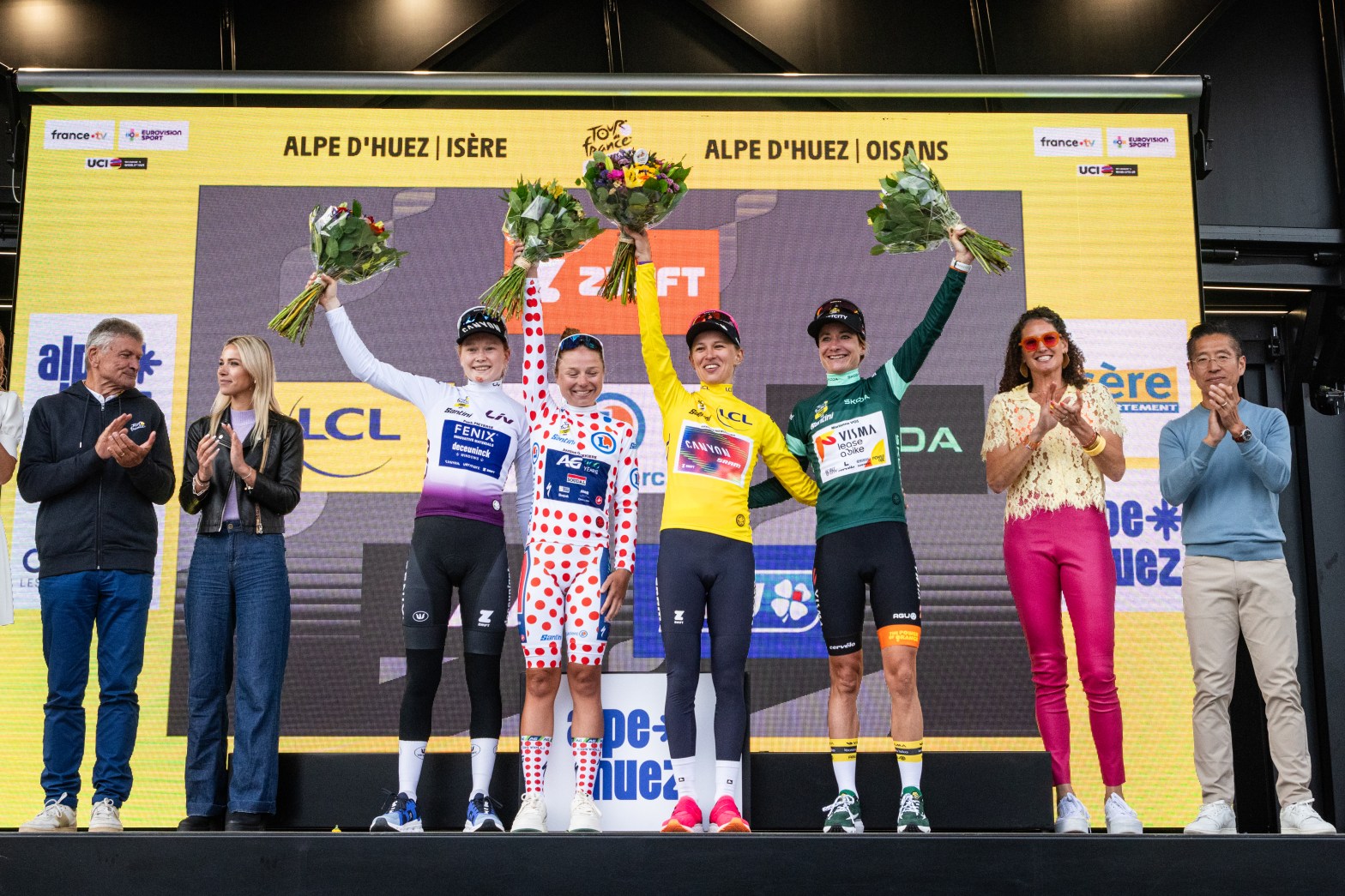
SHERI: There’s been an exciting increase in spectators, viewership, and sponsorship for women’s sports. Can you share any specific data or key metrics? Is there one country that leads viewership of the TdFFaZ over any other?
KATE: We don’t have the broadcast stats in yet, but I heard early reports that over 50% of televisions in the Netherlands were tuned into the Grand Depart stages. We know that France had a collective audience of 20 million views in 2023, which I believe is leading. I can’t wait to see this year’s numbers. One exciting stat I heard is that 52% of fans on the side of the road were women and girls.
SHERI: What strategies have most effectively increased viewer engagement and spectator numbers for the TdFFaZ?
KATE: Content is queen. Creative content and storytelling have been a big part of the strategy to engage fans. Each year, we’re seeing tremendous growth in the content leading into the race – from teams, sponsors and the athletes themselves. This has been highly effective in engaging fans and building the profiles of both the race and the teams and riders.
SHERI: Do you feel Kristen Faulkner’s impressive Gold Medal finish in this year’s Olympic road race fueled US viewership of TdFFaZ?
KATE: Absolutely. I had my high school basketball teammates sending me articles about it. This was a moment that transcended cycling and captivated a wider sports audience. That visibility is great for cycling and definitely piqued curiosity, awareness and interest leading into this year’s Tour de France Femmes avec Zwift.
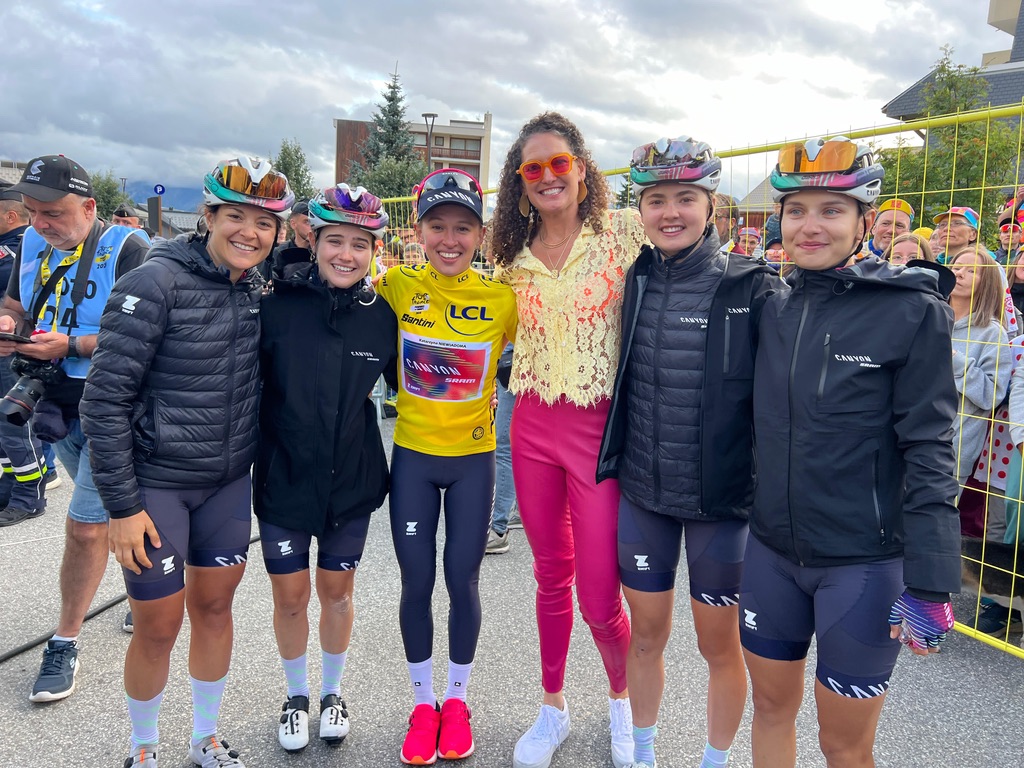
SHERI: This year, the TdFFaZ was sandwiched between the Paris Olympics and Paralympics, causing the race to be one day shorter and two stages in one day. Were any other changes made?
KATE: Just the timing! The race typically overlaps with the men’s finish. This year, we were 3 weeks later because of the Olympics. It was an excellent opportunity to show that this race can stand on its own and draw its own massive global audience.
SHERI: Given only 15% of current sports coverage is dedicated to women’s leagues and teams (triple what it was five years ago), how does the media coverage of the 2024 TdFFaZ compare to previous years?
KATE: The coverage was remarkable. The Tour de France Femmes avec Zwift dominated cycling coverage that week. It’s a fantastic development, many thanks to the sensational action and drama that the racers delivered. We also had broader coverage from dedicated wider women’s sports media outlets, like Togethxr and The Gist. I’m delighted to see so many women journalists, photographers and media covering the event. This race is elevated more than just the racers, and that’s also going to lead to more balanced coverage in the future.
SHERI: What challenges do you face in promoting women’s cycling, and how do you overcome them?
KATE: There’s always going to be feedback that directly compares the women to the men. ‘Why isn’t the women’s Tour 3 weeks?’ etc. While we all know women can race for 3 weeks, there’s an important question that asks if they should. My response is that we’re not trying to replicate the men’s scene. We have a whole new opportunity here, one that is potentially more suited to modern audiences. The non-stop action, incredible characters, exciting drama and inspiring backstories are so well positioned to bring new fans to the sport. Women’s racing is fresh and fierce and it’s adding new dimension to cycling. The race will continue to evolve each year, adding stages and drawing more broadcast, investment and fans, but we’ll do it at a sustainable rate that allows the sport to grow with it.
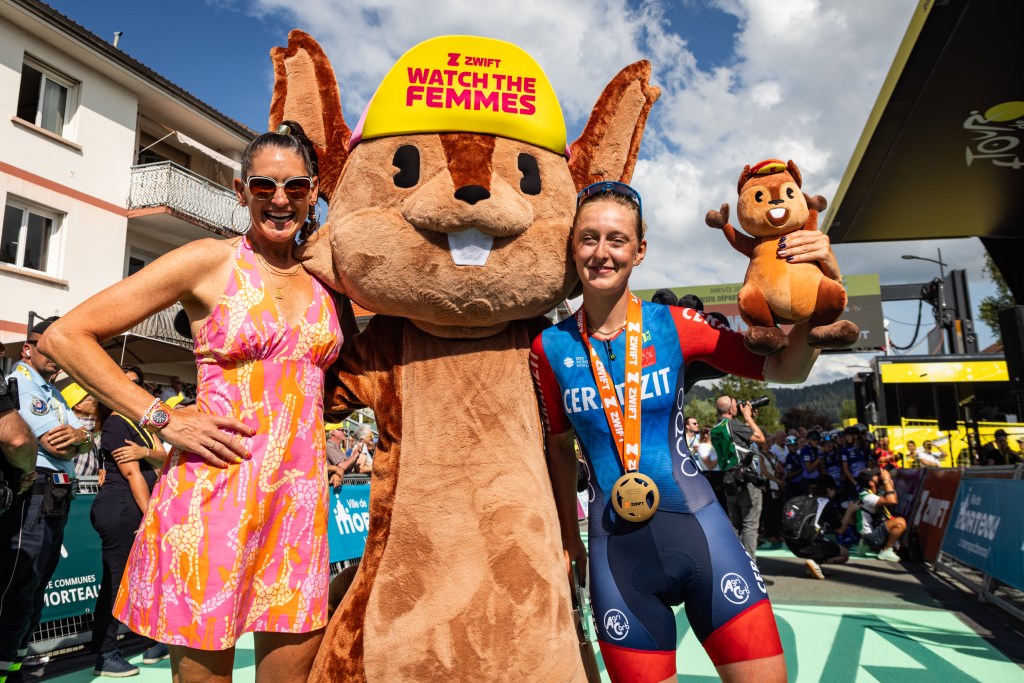
SHERI: What feedback have you received from participants and teams about the TdFFaZ, and how has it shaped your strategy going forward?
KATE: We’ve gotten great feedback that the global visibility of the race is attracting new team sponsors and investment, which in turn is increasing team budgets and creating more opportunity for riders. A stage win or jersey win at the Tour de France Femmes avec Zwift is life-changing. The Tour has been the key to unlocking step change in the sport, upping the professionalism of the peloton dramatically each year. It tells us that the investment is working. We’ll continue to put the full force of our platform and community behind this race.
SHERI: How do you see the role of technology evolving in promoting and managing women’s cycling?
KATE: Technology played a pivotal role in bringing us to this point. Programs like Zwift Academy and the Tour de France Virtual allowed us to innovate, opening up new pathways and opportunities for women’s cycling. These technological advancements provided the proof of concept that ultimately drove real change. Platforms like Zwift and Instagram allow women’s teams and riders to connect with a wider global audience, building new fans and engaging with sponsors in new ways. The riders are very savvy at leveraging that.
SHERI: Can you discuss any upcoming projects or events that Zwift is involved with that aim to further boost women’s cycling?
KATE: Watch this space! We are excited to work collaboratively with ASO and our industry partners to create content and events in the coming year that will engage the greater women’s cycling community. Watch the Femmes is a movement, a call to action for the industry to invest in women, design for women, create spaces in the sport that welcome and support women. This is how we’ll grow the sport together. The flywheel is in motion and it’s not stopping anytime soon.
As initially seen on Road Bike Rider
Photo credit: Leon Van Bon
 Sunflowers and Pedals