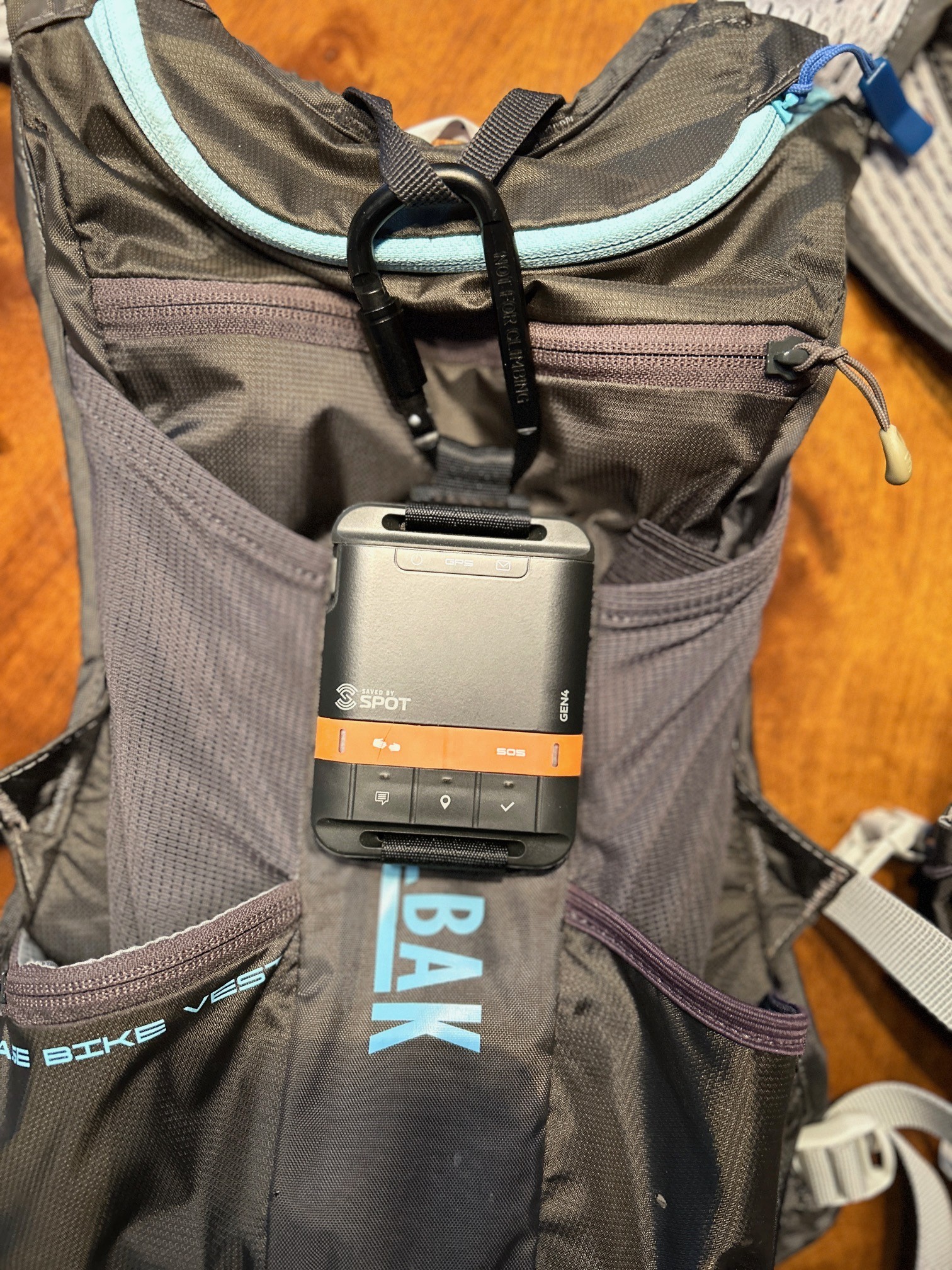
Do you frequently cycle or travel to remote areas with spotty or no cellular service? Or perhaps you value the peace of mind of knowing your loved ones can track your exact location? What if an emergency arises and you need to send an S.O.S. call? These are the very reasons I wanted to test the SPOT GEN4.
I had the perfect opportunity to try the SPOT GEN4 during a two-day adventure from home to Madison, Wisconsin. This trip allowed me to share my exact location and progress with family and friends using the device’s mapping feature.
The SPOT GEN4 uses GPS to pinpoint a user’s location and the Globalstar Satellite Network to transmit those GPS coordinates to others, ensuring you stay connected even in the most remote areas.
Pricing and Plans
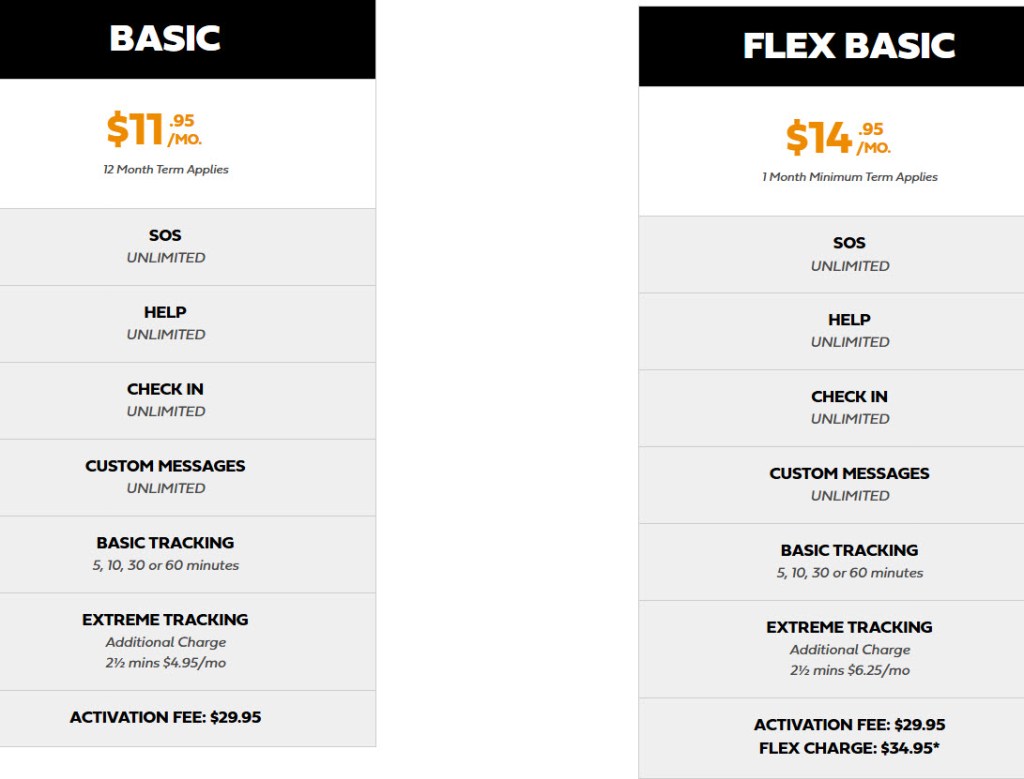
The SPOT GEN4 unit is a one-time $149.99 but also has an activation fee and subscription. I found the subscription plans a bit confusing and kept discovering features I needed; however, they were add-ons. If you plan to use a SPOT GEN4 frequently, then a contract plan is the way to go. Choose from monthly payments of $11.95 or pay upfront for the year to receive all allotted messages in advance.
S.O.S. for When There’s a Life-Threatening Event
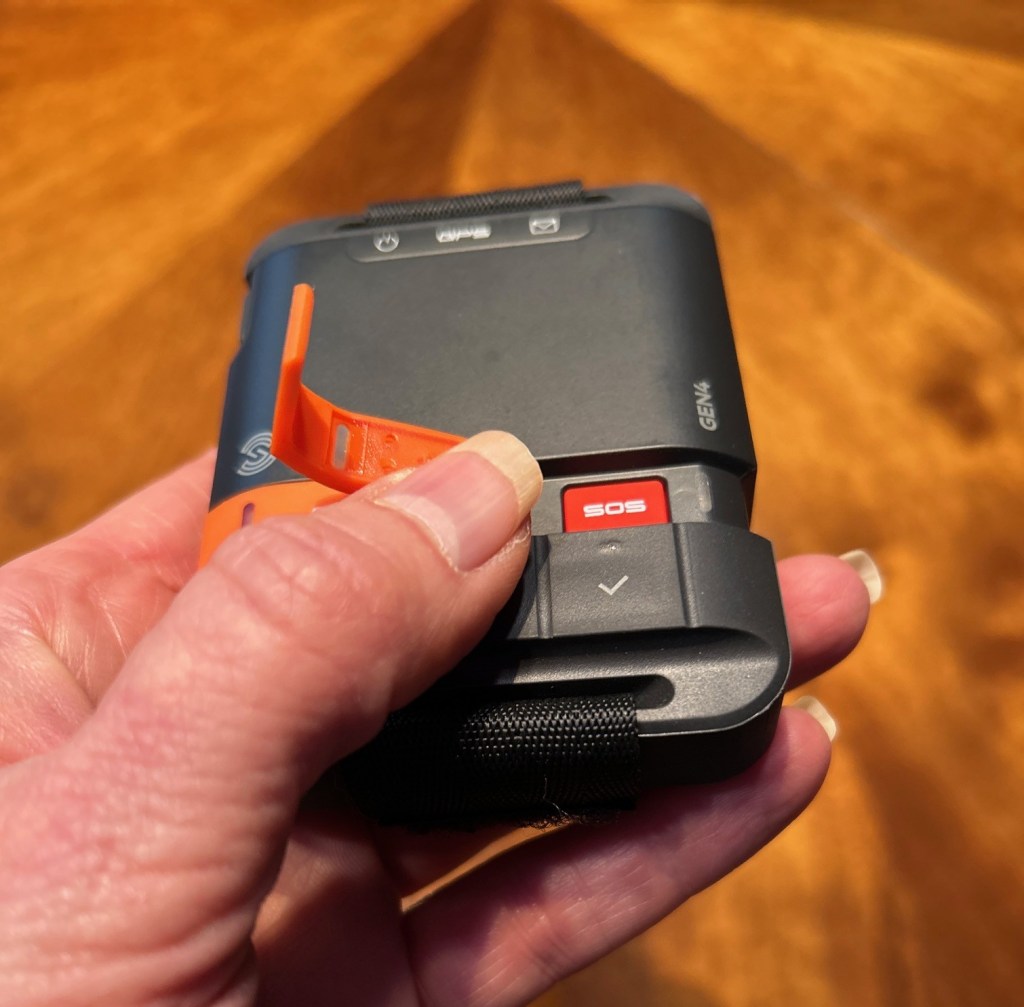
Hopefully, you’ll never need to use the S.O.S. button on the GEN4, but knowing it’s there gives you peace of mind – especially when you are on remote adventures. SPOT partners with FocusPoint International Inc. to coordinate emergency rescue and monitoring through dedicated search and rescue centers. Using your GPS coordinates, they will contact 9-1-1 responders in North America and 1-1-2 in Europe to get you help. Unfortunately, the device can only communicate that you are having a life-threatening event, not the details regarding your emergency.
SPOT Mapping Feature: Biking Use Case
The basic plan includes mapping for family and friends to follow your ride and track progress, eliminating the need to check in with everyone individually. To start tracking, turn the unit on and hold down the button with the pin drop icon until the green LED light appears. I found the light so small that it was difficult to detect if it was on when viewing in bright sunlight. Cupping my hand around the unit to shield it from the sun allowed me to confirm the LED light was on.
You can choose motion-activated tracking so a vibration sensor tells your SPOT GEN4 to send track updates when you are moving. The unit stops sending track updates when you stop moving.
Upgrades to the mapping feature are $2.50/month to the Premium plan. It allows you to organize cycling trips utilizing the new Journeys feature and look back on trip snapshots or share segments with family and friends. Upgrading to the Enterprise plan ($5/month) lets you send scheduled reports to an unlimited list of pre-determined contacts so they know your daily whereabouts without you having to manually check-in from a SPOT messenger device.
I found the mapping feature cumbersome to use and not very intuitive. The company created ten short video tutorials to help explain the functionality. I watched the videos, but I still required SPOT customer service.
While on my Madison trip, I provided several friends and family members with the tracking link to follow along. Half the people struggled to figure out how to use the mapping feature but eventually could see my breadcrumb route. The other half couldn’t see the route at all and gave up. Two of my friends regularly track me using Garmin LiveTrack. Their consensus was LiveTrack was much easier to use, except it renders itself useless if my cell phone dies or the signal is lost.
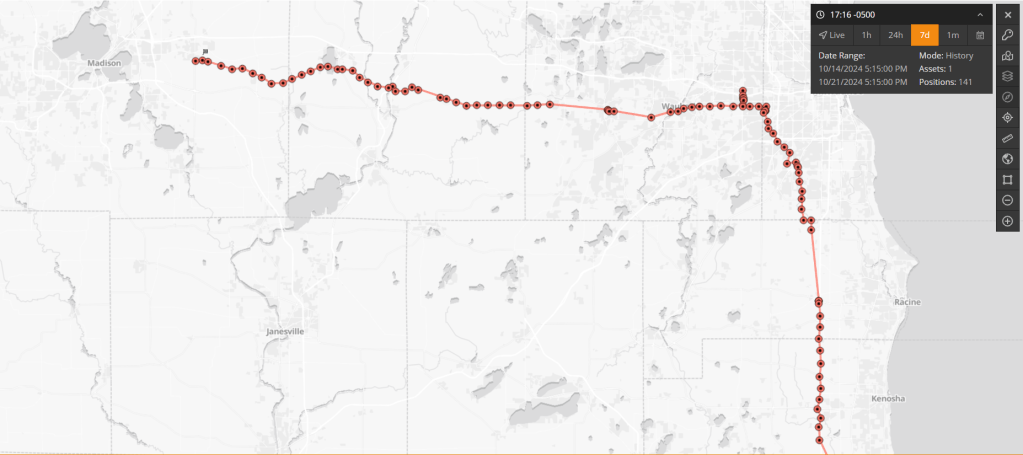
The screen capture above is from the SPOT Mapping tool, showing my route over the two days. The gaps between dots were most likely when I was riding under dense tree cover, and the GPS signal was lost. I asked the SPOT rep about the ability to upload my intended route so the people monitoring could see where I was heading and if I veered off the route. The rep responded that they normally don’t provide media access to this feature for testing purposes. I know Lael Wilcox used this feature during her ride around the world to share her intended route. I used this information to chase her down on day 108 and ride with her.
Extreme Tracking
The basic plan tracks at 5-minute intervals, but upgrading to Extreme Tracking allows you to choose your tracking rate of 2½, 5, 10, 30, or 60 minutes. Upgrading to this feature is $4.95/month, $59.40/year, or $6.25/month when using the Flex plan. Using a more frequent tracking rate reduces the battery life of your SPOT GEN4.
Check-In with Loved Ones
Before heading out on your adventure, create a pre-programmed text message or email to up to 10 contacts. When it’s time to “check in,” just hit the button with the checkmark, and the GPS coordinates are shared. Remember, you can’t receive or compose various messages with the GEN4; you can only send a pre-composed one.
Customize a Secondary “OK” Message
Once again, compose a Custom Message to send to your pre-determined contacts before heading out on your next trip. This feature is a secondary way of telling your contacts you are okay or if you’re having a non-life-threatening emergency.
Protection from Additional Emergency Expenses
For an annual cost of $39.99, the Overwatch X Rescue Plan protects you from additional expenses related to an emergency (e.g., travel medical and security assistance benefits), including no cost evacuations for SPOT GEN4 users.
Maintaining Your SPOT GEN4 Unit
The SPOT GEN4 unit requires very little maintenance since the case is rated IP68 dust and water-resistant. However, when it is time to change the 4 Lithium batteries, you’ll need a flathead screwdriver. The unit has no battery life indicator, so the SPOT support rep recommended changing them out after any multi-day ride. Discarding batteries with useful lives is wasteful, and lithium batteries are expensive.
Bottom Line
The SPOT GEN4 is a great option for when your next cycling adventurer has you heading into remote areas. Its key features, including GPS tracking, one-way S.O.S. alerts, and pre-programmed check-in messages, provide essential safety and connectivity. However, the complexity of the mapping feature and the inability to receive messages are notable drawbacks. The SPOT X device is a more robust option if you are looking for 2-way communication capabilities.
Unit price: $149.99 (at the time of writing this review, $99.99)
Subscription pricing: Basic – $11.95/month/12 month term applies; Flex Basic – $14.95/month/1 month minimum
Signals: GPS satellites
Messaging: Send only, can’t receive; Limited custom message that must be set up prior
Weight: 171 grams (including carabiner and Velcro strap); 142 g (unit only)
Dimensions: 3.48” H x 2.66 W x 0.93” D
Batteries: 4-AAA Ultimate Lithium (Requires loosening of 4 screws to change batteries.)
Battery life: Sends 1,250 CheckIn and Custom Messages on a single set of Lithium batteries
Dust and water-resistant: IP68
Operating temperature: -22 F to 140 F
How attaches: Velcro strap or carabiner
Availability: Online and retail
 Sunflowers and Pedals